
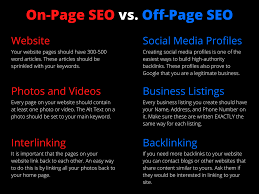
The Difference Between On-Page and Off-Page SEO
Search Engine Optimization (SEO) is a crucial aspect of digital marketing that aims to improve a website’s visibility on search engine results pages. There are two main components of SEO: on-page and off-page optimization. Understanding the difference between these two strategies is essential for developing a comprehensive SEO plan.
On-Page SEO
On-page SEO refers to the optimization efforts that are directly implemented on a website to improve its search engine ranking. This includes optimizing content, meta tags, headings, images, and internal linking structure. Key elements of on-page SEO include:
- Keyword research and optimization
- Creating high-quality, relevant content
- Optimizing meta tags (title tags, meta descriptions)
- Improving site speed and user experience
- Internal linking to relevant pages within the site
Off-Page SEO
Off-page SEO, on the other hand, involves activities that take place outside of the website but impact its search engine rankings. These external factors signal to search engines the credibility, authority, and relevance of a website. Off-page SEO strategies include:
- Building backlinks from reputable websites
- Social media marketing and engagement
- Guest blogging and influencer outreach
- Online reputation management
- Citation building for local businesses
The Importance of Both Strategies
Both on-page and off-page SEO are crucial for achieving high search engine rankings and driving organic traffic to a website. While on-page optimization ensures that your website is technically sound and provides valuable content to users, off-page strategies help establish your website’s authority and credibility in the eyes of search engines.
A successful SEO strategy combines both on-page and off-page optimization techniques to enhance a website’s visibility, attract more visitors, and ultimately improve conversion rates. By focusing on these two aspects of SEO, businesses can create a strong online presence that drives sustainable growth.
7 Essential Onpage and Offpage SEO Tips to Boost Your Website’s Performance
- Create high-quality, relevant content for your website.
- Use descriptive URLs and include keywords in them.
- Optimize your images with descriptive file names and alt text.
- Improve website loading speed for better user experience.
- Ensure mobile responsiveness of your website.
- Implement internal linking to improve site navigation and SEO.
- Build quality backlinks from reputable websites in your industry.
Create high-quality, relevant content for your website.
Creating high-quality, relevant content for your website is a cornerstone of effective SEO strategy. Not only does it engage and inform your audience, but it also signals to search engines that your site offers valuable information. By crafting content that resonates with your target audience and incorporates relevant keywords naturally, you can improve your site’s visibility and authority. Remember, quality content not only attracts visitors but also encourages backlinks from other reputable sites, further boosting your off-page SEO efforts.
Use descriptive URLs and include keywords in them.
Using descriptive URLs and incorporating relevant keywords in them is a fundamental practice in both on-page and off-page SEO. A well-crafted URL not only helps search engines understand the content of a webpage but also provides users with a clear idea of what to expect when they click on the link. By including targeted keywords in URLs, businesses can improve their chances of ranking higher in search results for those specific terms. This simple yet effective strategy enhances the overall SEO performance of a website and contributes to a better user experience, ultimately driving more organic traffic and increasing visibility online.
Optimize your images with descriptive file names and alt text.
Optimizing images with descriptive file names and alt text is a crucial aspect of both on-page and off-page SEO. When search engines crawl a website, they rely on image file names and alt text to understand the content of the images. By using relevant keywords in these elements, you not only improve the accessibility of your website for users with visual impairments but also enhance your chances of ranking higher in search engine results pages. This simple yet effective practice can significantly boost your website’s SEO performance and overall visibility online.
Improve website loading speed for better user experience.
Improving website loading speed is a critical aspect of both on-page and off-page SEO strategies. A faster-loading website not only enhances user experience but also positively impacts search engine rankings. Users are more likely to engage with a website that loads quickly, leading to lower bounce rates and increased time spent on the site. Search engines like Google prioritize websites that offer a seamless user experience, making website speed optimization an essential factor in improving overall SEO performance. By focusing on improving loading speed, businesses can attract and retain more visitors, ultimately driving higher conversion rates and achieving better online visibility.
Ensure mobile responsiveness of your website.
Ensuring the mobile responsiveness of your website is a critical aspect of both on-page and off-page SEO. With the increasing number of users accessing websites on mobile devices, search engines prioritize mobile-friendly sites in their rankings. By optimizing your website for mobile devices, you not only provide a better user experience but also improve your chances of ranking higher in search results. Mobile responsiveness is a key factor that can impact your website’s visibility, traffic, and ultimately, its success in the digital landscape.
Implement internal linking to improve site navigation and SEO.
Implementing internal linking is a valuable strategy to enhance site navigation and improve SEO performance. By strategically linking relevant pages within your website, you not only make it easier for visitors to explore different sections but also help search engines understand the structure and hierarchy of your content. Internal linking can distribute link equity throughout your site, boost the visibility of important pages, and encourage users to spend more time engaging with your content. This practice not only enhances user experience but also signals to search engines the relevance and importance of specific pages, ultimately contributing to improved rankings in search results.
Build quality backlinks from reputable websites in your industry.
Building quality backlinks from reputable websites in your industry is a crucial aspect of off-page SEO. By securing backlinks from trusted and relevant sources, you not only enhance your website’s authority and credibility in the eyes of search engines but also drive valuable referral traffic. These high-quality backlinks act as a vote of confidence for your website, signaling to search engines that your content is valuable and worthy of being shared. As a result, investing time and effort into cultivating relationships with reputable websites within your industry can have a significant impact on improving your search engine rankings and overall online visibility.