
The Importance of SEO in Digital Marketing
Understanding SEO
Search Engine Optimization (SEO) is a crucial component of any successful digital marketing strategy. It involves optimizing your website and content to improve its visibility in search engine results pages (SERPs). By utilizing SEO techniques, businesses can increase their online presence, attract more organic traffic, and ultimately boost their revenue.
The Benefits of SEO
Implementing effective SEO practices can lead to a multitude of benefits for your business. Firstly, it helps improve your website’s ranking on search engines like Google, making it easier for potential customers to find you. This increased visibility can result in higher click-through rates and more qualified leads.
Moreover, SEO allows you to target specific keywords related to your products or services, ensuring that your content reaches the right audience. By creating high-quality, optimized content, you can establish yourself as an authority in your industry and build trust with your target market.
SEO Best Practices
When it comes to SEO, there are several best practices that businesses should follow to maximize their results. This includes conducting keyword research to identify relevant terms that users are searching for, optimizing on-page elements such as title tags and meta descriptions, and creating valuable content that addresses the needs of your audience.
In addition, building high-quality backlinks from reputable websites can help improve your site’s authority and credibility in the eyes of search engines. Regularly monitoring and analyzing your website’s performance through tools like Google Analytics is also essential for tracking the success of your SEO efforts and making informed decisions moving forward.
Conclusion
In conclusion, SEO plays a vital role in the digital marketing landscape by enhancing visibility, driving organic traffic, and increasing conversions for businesses. By investing time and resources into optimizing your website for search engines, you can position yourself ahead of the competition and achieve long-term success online.
Essential FAQs: Mastering H1, H2, and H3 Tags for Optimal SEO Performance
- What is the purpose of using h1, h2, and h3 tags in SEO?
- How do heading tags (h1, h2, h3) impact SEO?
- What are the best practices for using h1 tags for SEO?
- Can multiple h1 tags be used on a single webpage for better SEO?
- How should keywords be incorporated into h2 and h3 tags for SEO optimization?
- Do search engines prioritize content within h1 tags over other headings like h2 and h3?
- Are there any specific guidelines to follow when structuring content with h1, h2, and h3 tags for optimal SEO results?
- What role do heading tags (h1, h2, and h3) play in improving website accessibility and user experience from an SEO perspective?
- Is there a recommended hierarchy or order to use heading tags (h1, h2, and so on) for effective SEO?
What is the purpose of using h1, h2, and h3 tags in SEO?
The Purpose of Using H1, H2, and H3 Tags in SEO
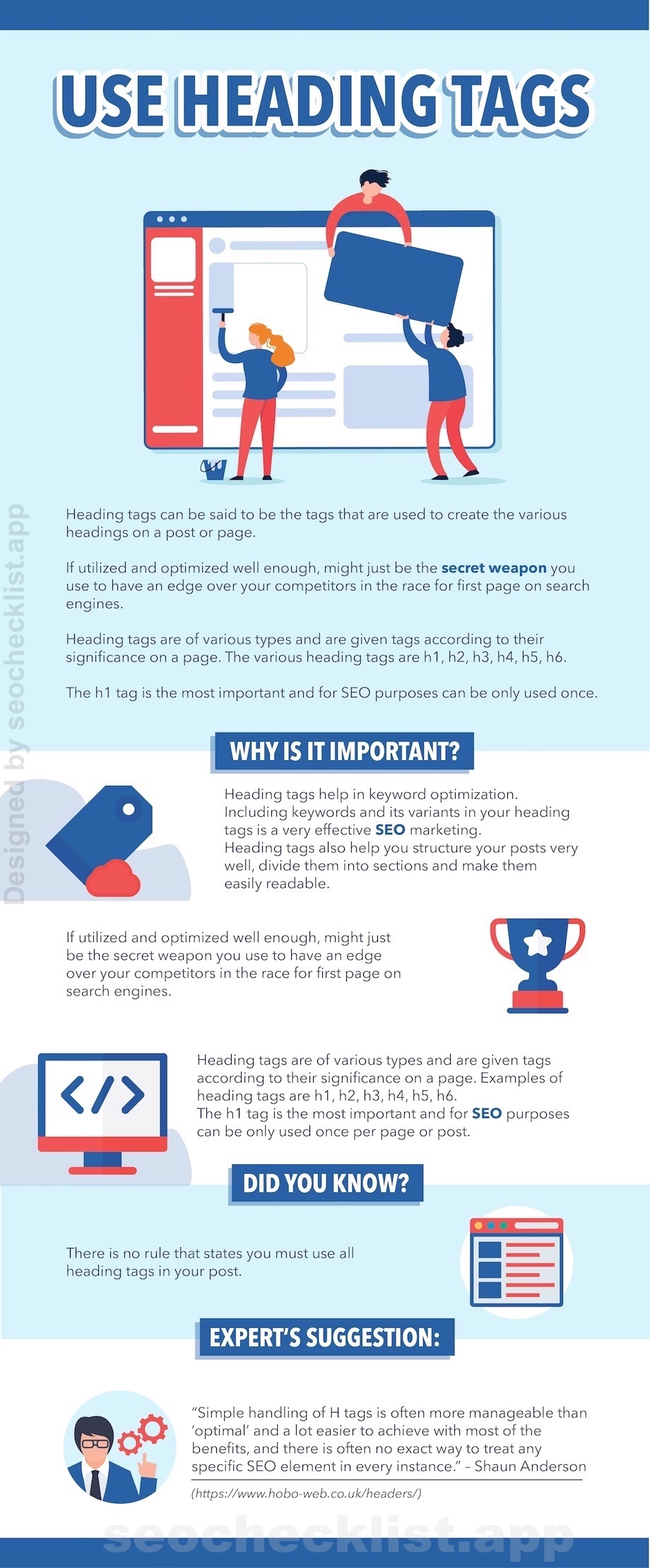
When it comes to SEO, utilizing heading tags such as H1, H2, and H3 serves a crucial purpose in structuring your content for both users and search engines. The H1 tag is typically used for the main heading of a page, signaling its importance to search engines and helping them understand the primary topic of the content. Subsequent headings like H2 and H3 provide further organization and hierarchy to the text, making it easier for readers to navigate and comprehend the information. From an SEO perspective, using these tags strategically can improve readability, keyword optimization, and overall user experience on your website, ultimately contributing to better search engine rankings.
How do heading tags (h1, h2, h3) impact SEO?
Heading tags (h1, h2, h3) play a significant role in SEO by helping search engines understand the structure and hierarchy of your content. The proper use of heading tags not only improves the readability and user experience of your webpage but also signals to search engines which parts of your content are most important. The h1 tag, typically used for the main heading or title of a page, carries the most weight in terms of SEO relevance. Subsequent heading tags like h2 and h3 are used to further divide and organize content, providing additional context for both users and search engine crawlers. By strategically incorporating relevant keywords into your heading tags and maintaining a logical hierarchy, you can enhance the overall SEO performance of your website.
What are the best practices for using h1 tags for SEO?
When it comes to optimizing h1 tags for SEO, it is essential to follow best practices to enhance the visibility and relevance of your content. The h1 tag should accurately reflect the main topic or keyword of the page, providing a clear and concise summary of the content that follows. It is recommended to use only one h1 tag per page to prioritize the primary focus and avoid diluting the importance of your key message. Additionally, incorporating relevant keywords in your h1 tag can help search engines understand the context of your content and improve its ranking in search results. By adhering to these best practices for utilizing h1 tags, you can effectively optimize your content for SEO and attract more organic traffic to your website.
Can multiple h1 tags be used on a single webpage for better SEO?
The use of multiple
tags on a single webpage for SEO purposes is a debated topic among web developers and SEO experts. While it is technically possible to include multiple
tags on a page, it is generally recommended to adhere to best practices by using only one
tag per webpage. Search engines like Google prioritize the content within the
tag as the main heading of the page, helping them understand the overall theme and relevance of the content. By using multiple
tags, you risk diluting the importance and clarity of your page’s primary message, potentially impacting its search engine rankings and user experience. It is advisable to structure your content with hierarchical heading tags (
,
, etc.) to maintain readability and semantic structure while optimizing for SEO.
How should keywords be incorporated into h2 and h3 tags for SEO optimization?
tag per webpage. Search engines like Google prioritize the content within the
tag as the main heading of the page, helping them understand the overall theme and relevance of the content. By using multiple
tags, you risk diluting the importance and clarity of your page’s primary message, potentially impacting its search engine rankings and user experience. It is advisable to structure your content with hierarchical heading tags (
,
, etc.) to maintain readability and semantic structure while optimizing for SEO.
How should keywords be incorporated into h2 and h3 tags for SEO optimization?
tags, you risk diluting the importance and clarity of your page’s primary message, potentially impacting its search engine rankings and user experience. It is advisable to structure your content with hierarchical heading tags (
,
, etc.) to maintain readability and semantic structure while optimizing for SEO.
How should keywords be incorporated into h2 and h3 tags for SEO optimization?
, etc.) to maintain readability and semantic structure while optimizing for SEO.
How should keywords be incorporated into h2 and h3 tags for SEO optimization?
When incorporating keywords into h2 and h3 tags for SEO optimization, it is important to ensure that they are relevant to the content of the respective headings. H2 tags typically represent subheadings that provide structure and organization to the content, so including keywords that accurately reflect the topic of the section can help search engines understand the context of your page. Similarly, using keywords in h3 tags, which further break down subtopics within a section, can enhance the overall keyword optimization strategy. By strategically placing relevant keywords in h2 and h3 tags while maintaining readability and coherence, you can improve your website’s SEO performance and increase its visibility in search engine results pages.
Do search engines prioritize content within h1 tags over other headings like h2 and h3?
When it comes to search engine optimization (SEO), there is no direct preference for content within h1 tags over other headings like h2 and h3 in terms of ranking. While the use of h1 tags is important for signaling the main topic or theme of a webpage to search engines, all heading tags (h1, h2, h3, etc.) play a role in organizing and structuring content for both users and search engines. It’s essential to use heading tags appropriately to create a hierarchy that enhances readability and user experience. Ultimately, search engines aim to deliver the most relevant and valuable content to users, regardless of the specific heading tag used.
Are there any specific guidelines to follow when structuring content with h1, h2, and h3 tags for optimal SEO results?
When structuring content with h1, h2, and h3 tags for optimal SEO results, there are specific guidelines that can help improve the visibility and ranking of your web pages. It is recommended to use the h1 tag for the main heading of your page, which should accurately summarize the content. Subheadings can then be organized using h2 tags to break down different sections of the content, while h3 tags can be used for further subtopics within each section. This hierarchical structure not only enhances readability for users but also helps search engines understand the relevance and structure of your content, ultimately improving your SEO performance.
What role do heading tags (h1, h2, and h3) play in improving website accessibility and user experience from an SEO perspective?
Heading tags (h1, h2, and h3) play a crucial role in improving website accessibility and enhancing user experience from an SEO perspective. These tags not only help search engines understand the structure and hierarchy of your content but also make it easier for visitors to navigate your website. By using heading tags appropriately, you can break up your content into clear sections, making it more scannable and digestible for users. This not only improves readability but also signals to search engines the importance of specific content on your page, ultimately contributing to better rankings and overall SEO performance.
Is there a recommended hierarchy or order to use heading tags (h1, h2, and so on) for effective SEO?
When it comes to optimizing heading tags (h1, h2, etc.) for SEO, there is a recommended hierarchy that can enhance the effectiveness of your content. The general guideline is to use only one h1 tag per page, representing the main heading or title of the content. Subsequent headings should follow a logical order, with h2 tags used for subheadings that support the main topic introduced in the h1 tag. Similarly, h3 tags can be utilized for further subcategories under h2 headings. This hierarchical structure not only helps search engines understand the organization of your content but also improves readability for users, making it easier for them to navigate and comprehend the information provided.