
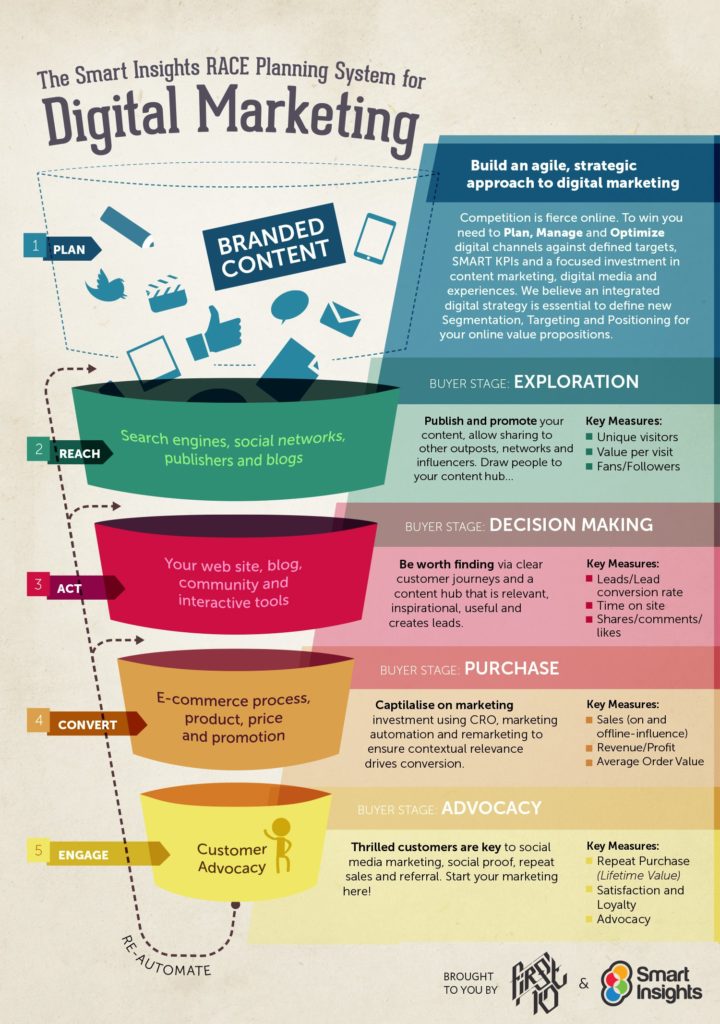
Digital Marketing: A Practical Guide to Marketing Your Business Online
Digital marketing is the use of online channels and technology to reach potential customers, build relationships, and encourage action. It is an important part of modern marketing because people use search engines, social media, email, and websites to discover and evaluate products and services.
Successful digital marketing is about more than posting online or running ads. It connects a clear business goal with the right audience, message, and channel—and uses results to improve over time.
What Is Digital Marketing?
Digital marketing includes the strategies a business uses to promote itself through digital channels. These channels can help a company introduce its brand, attract visitors, generate leads, make sales, and stay in touch with customers.
Common digital marketing channels include:
- Search engine optimization (SEO): Improving a website so it can appear more prominently in unpaid search results.
- Paid search advertising: Placing ads on search engine results pages for relevant queries.
- Social media marketing: Sharing content, building a community, and advertising on social platforms.
- Email marketing: Sending useful, relevant messages to subscribers and customers.
- Content marketing: Creating articles, videos, guides, and other resources that inform or help an audience.
- Website marketing: Designing and improving a website to explain an offer and make it easy for visitors to take the next step.
Why Digital Marketing Matters
Digital marketing gives businesses ways to connect with people where they already spend time. It can also make it easier to reach a specific audience, test different messages, and measure activity. For example, a business can track how many people visited a page, clicked an ad, signed up for a newsletter, or completed a purchase.
Measurement does not guarantee success, but it provides information that can guide better decisions. Instead of relying only on guesswork, marketers can review performance and adjust their approach.
Start With a Clear Marketing Strategy
Before choosing channels or creating content, define what the business wants to achieve. A goal might be to increase qualified website visits, generate more inquiries, grow online sales, or encourage repeat purchases. Clear goals help determine which tactics are worth pursuing.
It is also important to understand the intended audience. Consider what customers need, what questions they ask, how they make decisions, and where they look for information. The more relevant the message is to the audience, the more likely it is to earn attention.
Choose the Right Channels
Not every business needs to use every digital marketing channel. A local service provider may benefit from a well-optimized website and local search visibility. A business with a visually compelling product might focus more on social media. A company with a longer sales process may use educational content and email to build trust over time.
Choose channels based on the audience, the offer, available resources, and the goal. A focused plan that is consistently maintained is often more useful than a scattered presence across many platforms.
Create Helpful, Consistent Content
Content can answer customer questions, explain how a product or service works, and show what makes a business distinctive. Strong content is clear, accurate, and useful to the people it is meant to reach. It should also have a purpose, such as educating readers, supporting a campaign, or helping visitors make an informed decision.
Consistency matters, but publishing frequently is not the only measure of quality. A smaller number of useful, well-maintained resources can serve an audience better than a large collection of rushed posts.
Measure Results and Improve
Digital marketing works best as an ongoing process. Review performance against the original goals, identify what is working, and look for opportunities to improve. Useful metrics depend on the objective. Website visits may matter for awareness, while qualified leads or completed purchases may be more relevant for sales.
Look beyond surface-level numbers. A large number of clicks may not help if visitors do not find what they need. Consider the full customer journey, from the first interaction to the desired action, and make changes based on evidence.
Build a Sustainable Digital Marketing Plan
Effective digital marketing combines strategy, useful communication, appropriate channels, and ongoing evaluation. Businesses can begin with a clear goal, a strong understanding of their audience, and a manageable set of tactics. As results come in, the plan can evolve.
When digital marketing supports broader business goals, it becomes more than a collection of online activities. It becomes a practical way to reach customers, communicate value, and build lasting relationships.
7 Key Benefits of Digital Marketing
- Reaches customers online
- Targets specific audiences
- Tracks campaign performance
- Supports measurable goals
- Builds brand awareness
- Encourages customer engagement
- Adapts as markets change
6 Key Disadvantages of Digital Marketing
- High competition for audience attention
- Paid campaigns can become expensive
- Results may take time to appear
- Privacy rules limit tracking
- Requires consistent content and upkeep
- Campaigns need ongoing testing and analysis
Reaches customers online
One key advantage of digital marketing is that it helps businesses reach customers online, where many people search for information, compare options, and make purchases. Through channels such as search engines, social media, email, and websites, businesses can connect with audiences across locations and share relevant messages when potential customers are looking for solutions.
Targets specific audiences
Digital marketing lets businesses target specific audiences based on factors such as location, interests, demographics, and online behavior. This helps put relevant messages in front of people who are more likely to need a product or service, rather than using a one-size-fits-all approach. By focusing campaigns on the right audience, businesses can make better use of their marketing budget and create more meaningful connections with potential customers.
Tracks campaign performance
One major advantage of digital marketing is the ability to track campaign performance. Businesses can monitor metrics such as website visits, clicks, leads, and sales to see how people respond to their marketing. This information helps identify which channels and messages are working, where improvements may be needed, and how to make better use of the marketing budget.
Supports measurable goals
Digital marketing supports measurable goals by giving businesses clear ways to track campaign performance. Metrics such as website visits, email sign-ups, qualified leads, and sales can show whether marketing activities are moving the business toward its objectives. By reviewing these results, companies can identify what is working, adjust what is not, and make more informed decisions about where to invest their time and budget.
Builds brand awareness
Digital marketing helps build brand awareness by putting a business in front of potential customers across search engines, social media, websites, and email. Consistent, helpful content and targeted campaigns make it easier for people to recognize the brand, understand what it offers, and remember it when they’re ready to make a purchase.
Encourages customer engagement
Digital marketing encourages customer engagement by giving businesses and customers easy ways to interact. Social media comments, email replies, website chat, and online surveys let people ask questions, share feedback, and connect with a brand. By responding thoughtfully and offering useful, relevant content, businesses can build trust, strengthen customer relationships, and better understand what their audience needs.
Adapts as markets change
One of the key advantages of digital marketing is its ability to adapt as markets change. Businesses can monitor customer behavior, industry trends, and campaign performance in real time, then adjust their messaging, channels, or budgets accordingly. This flexibility helps marketers respond to new opportunities and changing customer needs without having to rebuild an entire marketing plan.
High competition for audience attention
One challenge of digital marketing is the intense competition for audience attention. People encounter a constant stream of ads, emails, social posts, and other content, making it difficult for any single message to stand out. Businesses need to understand their audience and offer relevant, useful content, while avoiding excessive or repetitive promotions that may be ignored or cause people to disengage.
Paid campaigns can become expensive
Paid digital marketing campaigns can become expensive, especially in competitive industries where businesses pay more to reach the same audiences. Costs may rise quickly if ads are poorly targeted, campaigns run longer than planned, or results are not monitored closely. To manage spending, set a clear budget, track performance regularly, and adjust campaigns based on which ads are delivering meaningful results.
Results may take time to appear
One drawback of digital marketing is that results may take time to appear. Strategies such as search engine optimization, content marketing, and building an engaged social media audience often require consistent effort before they lead to noticeable traffic, leads, or sales. This can be challenging for businesses seeking immediate returns, so it’s important to set realistic expectations, track progress with relevant metrics, and give well-planned campaigns enough time to develop.
Privacy rules limit tracking
Privacy rules limit tracking, making it harder for digital marketers to collect and use personal data about customers. Regulations and browser privacy features can restrict cookies, cross-site tracking, and access to user information. As a result, businesses may have less visibility into how people discover their websites or respond to ads, which can make campaign measurement and audience targeting less precise. Marketers can adapt by relying on consent-based data collection, clear privacy practices, and aggregated performance metrics.
Requires consistent content and upkeep
One drawback of digital marketing is that it requires consistent content and ongoing upkeep. Websites, social media profiles, email campaigns, and online ads need regular attention to stay accurate, useful, and relevant. Creating fresh content and monitoring performance takes time and resources, while outdated information or neglected channels can make a business seem inactive and weaken customer trust.
Campaigns need ongoing testing and analysis
One drawback of digital marketing is that campaigns require ongoing testing and analysis to stay effective. Audience preferences, platform algorithms, and market conditions can change, so businesses need to regularly review performance data, test different messages or formats, and adjust their strategies. This takes time and resources, and without consistent monitoring, a campaign may continue underperforming or miss opportunities to reach the right customers.