
Pay-Per-Click (PPC) Advertising: A Practical Guide for Businesses
Pay-per-click (PPC) advertising is a digital marketing model in which an advertiser pays when someone clicks on an ad. Instead of waiting for people to discover a business through unpaid search results or social posts, PPC can help put an offer in front of a targeted audience at the right time.
PPC can support goals such as attracting website visitors, generating leads, increasing sales, or promoting a local business. To get good results, however, campaigns need thoughtful planning, relevant ads, and ongoing measurement.
How PPC Works
In many PPC platforms, advertisers compete to show ads to people who search for particular terms or match certain audience criteria. The advertiser typically sets a budget and may choose how much to bid for a click or conversion. The platform then considers factors such as the bid, ad relevance, and landing page experience when deciding which ads to show and where.
A click does not guarantee a sale or inquiry. The goal is to attract the right visitors and make it easy for them to take the next step, such as calling, making a purchase, or filling out a form.
Common Types of PPC Advertising
- Search ads: Text ads that can appear on search engine results pages when people look for relevant products or services.
- Display ads: Visual ads shown on websites and apps across an advertising network.
- Shopping ads: Product-focused ads that may feature images, prices, and store information.
- Social media ads: Paid placements on social platforms, targeted by factors such as interests, location, or behavior.
- Video ads: Ads that appear before, during, or alongside video content.
- Remarketing ads: Ads designed to reach people who have previously visited a website or interacted with a business.
Benefits of PPC
PPC offers several advantages when it is managed carefully:
- Visibility: Ads can help a business appear prominently for relevant searches or audience segments.
- Targeting: Campaigns can be tailored by location, device, search intent, interests, and other available options.
- Budget control: Advertisers can set spending limits and adjust budgets as performance changes.
- Measurable results: Platforms can report impressions, clicks, costs, and conversions, making it easier to assess performance.
- Speed: Once campaigns are approved and active, they can begin generating traffic faster than many long-term marketing channels.
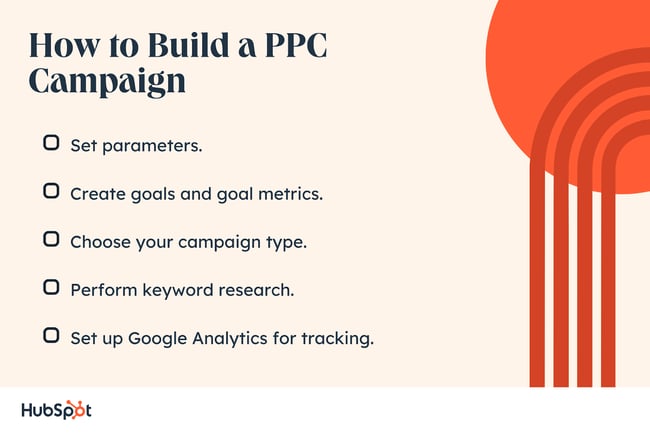
How to Build a Strong PPC Campaign
Set a Clear Goal
Start by deciding what the campaign should accomplish. A campaign designed to generate phone calls may need different ads and landing pages than one focused on online purchases. A clear goal also helps determine which results to track.
Understand Your Audience
Consider who your ideal customers are, what they need, and what they might search for before choosing a product or service. Use that insight to guide your keywords, audience settings, messaging, and offers.
Choose Relevant Keywords and Targeting
For search campaigns, select terms that reflect your products or services and the intent behind a search. Organize related keywords into focused groups, and consider excluding irrelevant searches with negative keywords. For other campaign types, use audience and placement settings that align with your goals.
Write Clear, Specific Ads
Strong ads quickly explain what you offer and why it matters. Use accurate claims, relevant language, and a direct call to action. Make sure the ad matches the search, audience, and page it leads to.
Create a Useful Landing Page
The landing page should continue the message of the ad and make the next step obvious. Keep it easy to navigate, ensure it works well on mobile devices, and include the information visitors need to make a decision. A slow or confusing page can waste advertising spend even when the ad earns clicks.
Track Conversions
Set up conversion tracking for actions that matter to the business, such as purchases, qualified form submissions, calls, or appointment bookings. Clicks and impressions show activity, but conversion data helps reveal whether the campaign is contributing to business results.
Review and Improve
Check performance regularly and look for patterns. Test different ad messages, landing pages, keywords, and audience settings. Make changes based on reliable data rather than reacting to a small number of clicks or a brief fluctuation.
PPC Metrics to Know
- Impressions: How many times an ad was shown.
- Clicks: How many times people clicked an ad.
- Click-through rate (CTR): The percentage of impressions that resulted in clicks.
- Cost per click (CPC): The average amount paid for each click.
- Conversion rate: The percentage of visitors who completed a desired action.
- Cost per conversion: The average advertising cost for each tracked conversion.
- Return on ad spend (ROAS): Revenue attributed to advertising compared with the advertising cost.
The most important metrics depend on the campaign’s purpose. For example, an awareness campaign may focus on reach and engagement, while an online sales campaign may prioritize conversions, revenue, and ROAS.
Common PPC Mistakes to Avoid
- Launching campaigns without a defined goal or conversion tracking.
- Using broad targeting that attracts unqualified clicks.
- Sending all ad traffic to the homepage instead of a relevant landing page.
- Ignoring search terms that reveal irrelevant traffic.
- Making frequent changes without enough data to evaluate the results.
- Focusing only on clicks instead of meaningful business outcomes.
- Setting a budget without considering the value and cost of acquiring a customer.
Is PPC Right for Your Business?
PPC can be useful for businesses that want to reach specific audiences, promote particular offers, or generate measurable traffic and leads. Its effectiveness depends on factors such as competition, campaign setup, budget, website experience, and the value of each customer.
Before starting, consider what a successful result looks like and how much the business can reasonably spend to achieve it. With clear goals, careful targeting, and regular optimization, PPC can become a valuable part of a broader marketing plan.
6 Essential Tips for Successful PPC Campaigns
- Set clear goals before launching campaigns.
- Use focused keywords with strong intent.
- Write specific, benefit-driven ad copy.
- Match each ad to a relevant landing page.
- Track conversions, not just clicks.
- Test bids and creative regularly.
Set clear goals before launching campaigns.
Set clear goals before launching a PPC campaign so you know what success looks like and how to measure it. Decide whether you want to generate leads, increase online sales, encourage phone calls, or build awareness. Then choose metrics that match your goal—such as conversions, cost per lead, revenue, or reach—and use them to guide your budget, targeting, ads, and landing page. A focused goal makes it easier to evaluate performance and improve the campaign over time.
Use focused keywords with strong intent.
Use focused keywords with strong intent to reach people who are actively looking for what your business offers. Instead of bidding on broad terms that may attract casual browsers, choose specific search phrases that signal a readiness to take action, such as comparing options, requesting a quote, or making a purchase. This can help reduce irrelevant clicks, make your ad copy more relevant, and direct your budget toward visitors who are more likely to convert.
Write specific, benefit-driven ad copy.
Write ad copy that clearly describes what you offer and why it matters to the customer. Instead of relying on vague claims, highlight a specific benefit—such as saving time, getting same-day service, or accessing a free estimate—and pair it with a clear call to action. Benefit-driven, relevant messaging helps the right people recognize the value of your offer and encourages them to click.
Match each ad to a relevant landing page.
Match each PPC ad to a landing page that directly reflects its message, offer, and keywords. When visitors find the information they expected after clicking, they’re more likely to stay, take action, and become customers. A relevant landing page also creates a smoother experience and can help improve campaign performance.
Track conversions, not just clicks.
Track conversions, not just clicks. Clicks show that people are engaging with your ads, but they don’t reveal whether those visits lead to valuable actions. Set up conversion tracking for outcomes that matter to your business, such as purchases, qualified leads, phone calls, or appointment bookings. By comparing conversions and their costs across campaigns, you can identify what’s working, improve underperforming ads, and focus your budget on results—not just traffic.
Test bids and creative regularly.
Test bids and creative regularly to find the combination that delivers the best results for your PPC budget. Try adjusting bids to see how they affect visibility and cost, and experiment with ad headlines, descriptions, images, and calls to action. Change one element at a time when possible, then use conversion data—not clicks alone—to guide your next move. Regular testing helps you adapt to audience behavior and market changes without relying on guesswork.